Health and medicine, written for college-bound students, by students who are headed there too.
Emergency medicine physicians have spent years watching patients arrive too late and too early. They draw the line clearly, in plain language, for people our age.
You walk in, a nurse sees you for five minutes, and then you wait. Most people experience triage as a brief check-in. It is not. It is a rapid clinical assessment governed by a scoring system and it determines everything that follows.
A conversation with doctors from the emergency medicine on symptoms that can't wait, the ones that can, and why mental health emergencies always count.
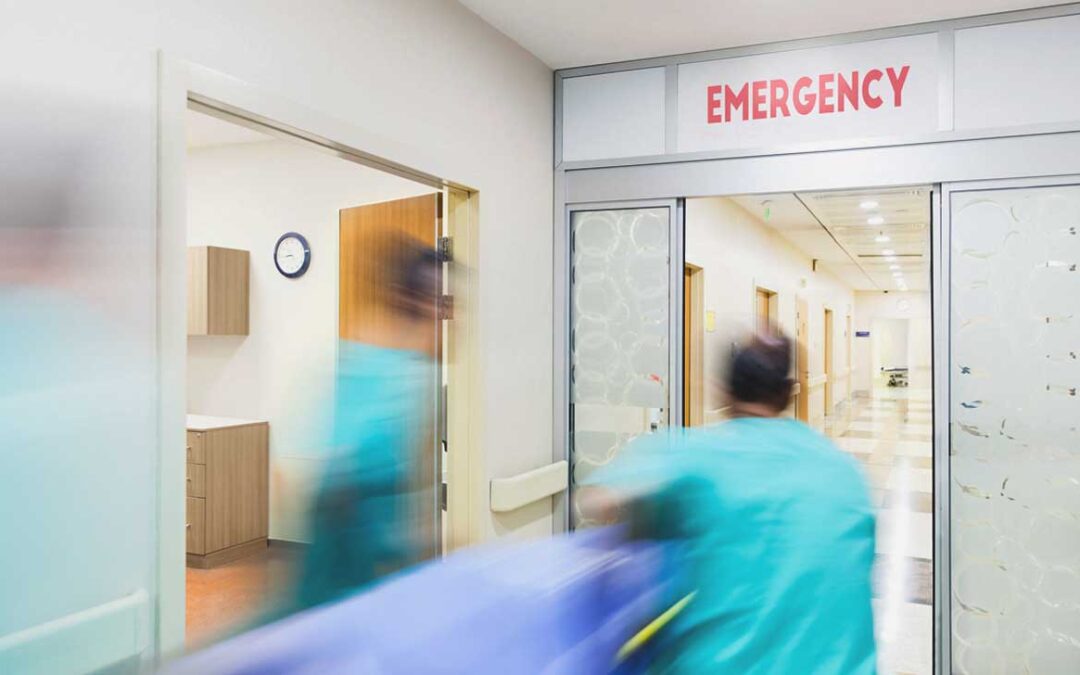
The six-hour wait has an explanation. It is not staffing. It is a financial architecture decades in the making and understanding it changes the question.
The first semester of college is one of the highest-risk periods for mental health crises in a young person's life. Most students arrive completely unprepared. Here is what to know, what to ask, and what to do before you go.
"Medicine is only as good as its explanation. A diagnosis your doctor understands but you don't is not, in any meaningful sense, a diagnosis you have." — Evelyn Huang, Founder & Editor-in-Chief
You are about to enter one of the most demanding environments of your life. You will be making decisions about your own health, for the first time, entirely on your own. Most of us were never taught how to do that.
We started this publication because we are in that same position. We are college-bound students who got curious, went looking for answers, and found that most health writing is not written for us. So we wrote it ourselves.
The Chart Notes covers medicine, health and wellness, and the healthcare system in language that actually makes sense to someone our age. No jargon. No agenda. Just honest reporting from students who believe that understanding your health is not optional. It is one of the most important things you can learn before you go.
No spam. No advertising. Unsubscribe anytime.

You walk in, a nurse sees you for five minutes, and then you wait. Most people assume triage is a formality. It is not. It is the decision that shapes everything that comes after.
There is a moment, right after you check in at an emergency department, that most patients completely overlook. A nurse pulls you aside. They ask a few questions. They take your blood pressure, glance at you quickly, and send you back to a seat. The whole thing feels almost casual. It is not casual at all. What just happened in those three to five minutes will determine which room you go to, how long you wait, and how much attention your case receives. It is called triage, and it is the most consequential part of your ER visit that nobody ever explains to you.
Understanding how it works will not get you seen faster. But it will make the waiting make sense, and it will help you communicate in a way that actually serves you.
The first thing your triage nurse asks is deceptively simple. "What brought you in today?" That question has a name in medicine: the chief complaint. It sounds like small talk. It is not. Your answer sets the entire direction of what follows. If you say something vague like "I just don't feel right," the nurse has to work with very little. If you say something specific like "I have pain in my lower right side that started two hours ago and it is getting worse," you have given them something they can actually use. The more precise you are, the better your care will be. This is not about impressing anyone. It is about giving the people treating you the clearest possible picture of what is happening in your body.
Before you answer a single question, your nurse is already forming an impression. They are watching how you walked in, noticing the color of your skin, listening to the rhythm of your breathing, and registering whether you look like someone in genuine distress or someone who is anxious but stable. None of this is judgmental. It is clinical. A person who walks in calmly but is breathing faster than normal is not as stable as they look. A person who is visibly upset but has completely normal breathing and color may not be as urgent as they feel. Nurses are trained to see the difference, and they do it faster than most people realize.
After the visual assessment, your nurse checks five measurements: blood pressure, heart rate, breathing rate, oxygen levels, and temperature. Think of these less as a checklist and more as five different ways of asking the same question: is your body keeping up, or is it working too hard? A heart beating more than 100 times per minute is a signal that something has the body on alert. Oxygen levels below 94 percent mean the lungs are not getting enough air into the bloodstream. A high fever, especially paired with other symptoms, tells a very different story than a high fever on its own.
Once the nurse has all of this, they assign you a number between 1 and 5. That number is your triage score, and it is the single thing that determines when you are seen.
"The person who went back before you did not cut the line. Their number was higher. The ER is not first come, first served. It is most urgent, first served."
This is the thing that frustrates people most in waiting rooms. Someone who arrived after you gets called back first. It feels unfair. It is not unfair. It is the system working the way it is supposed to work. The person who went back before you simply had a higher triage score. Their body needed something more urgently than yours did in that moment.
Most of us have stood in a kitchen or a dorm room at 11pm, googling our symptoms, genuinely unsure whether what we are feeling is serious enough to act on. This article is for that moment.
This conversation is drawn from interviews conducted during a summer of clinical observation across emergency and family medicine settings. It has been edited for length and clarity. Please consult a licensed physician for guidance specific to your own health situation.
What is the most common reason people come to the ER when they probably did not need to?
"Ear infections and sore throats, honestly. Especially on weekends when urgent care is closed and people don't know where else to go. I genuinely understand why they come. Being sick is uncomfortable and scary, and when you feel bad you want someone to look at you. But here is the thing: an uncomplicated ear infection gets treated the exact same way here as it would at an urgent care clinic. The wait is longer. The bill is much higher. And in the meantime, there is a person with a more serious problem sitting in the waiting room a little longer than they should be."
So how does someone actually make that call? ER or urgent care?
"Some symptoms should never wait for an urgent care appointment. Chest pain or pressure is one of them, even if you are pretty sure it is just heartburn. Difficulty breathing when you are sitting still. Any sign of a stroke, which we remember with the word FAST: Face drooping on one side, Arm weakness, Speech that sounds strange or slurred, and Time, meaning call 911 immediately. If you have a headache that hits you like a thunderclap and feels like the worst pain of your life, that is not a regular headache. That can be a bleed in the brain and it needs immediate attention. And high fever alongside a stiff neck, where you genuinely cannot bring your chin to your chest, that combination should always come straight to us."
"Please do not be embarrassed to come in. In all my years doing this, I have never once thought less of a patient for seeking care. The person I worry about is the one who waited too long because they did not want to be a burden."
What about the situations that fall somewhere in the middle?
"Stomach pain is the one I get asked about most often. If you have mild cramps that come and go, you probably do not need the ER. But if you have severe pain concentrated in your lower right side that keeps getting worse and does not ease up at all, please come in because that could be appendicitis. With allergic reactions, the question I would ask is whether the reaction is staying on the surface of your body or whether it is affecting your breathing. Hives and itching alone can usually wait for urgent care. But if your throat starts to feel tight, if you are wheezing, or if your face is swelling in a way that feels alarming, that is a different situation entirely and you should not drive yourself anywhere."
A lot of students feel like mental health emergencies are somehow less legitimate than physical ones.
"That idea needs to go away. Mental health emergencies are real emergencies. If you or someone you care about is having thoughts of suicide or self-harm, especially if there is a specific plan forming, that is exactly the kind of situation the ER exists for. Come in. Call someone. Do not talk yourself out of it because you feel like you might be overreacting. I have never once regretted seeing a patient who came in out of caution. What I do carry with me are the times when someone waited too long."
Is there anything you wish more patients knew before they walked through the door?
"Bring a list. I know that sounds simple but it matters more than people realize. Write down your medications, your allergies, any medical conditions you have been diagnosed with, and keep that list somewhere easy to find on your phone. When someone comes in and cannot tell me what they take or what they are allergic to, it slows everything down. That information shapes every single decision I make about how to treat you."
The six-hour wait feels like a scheduling problem. It is not. It is the visible result of a financial system built over decades, and once you understand how it works, the waiting room starts to make a different kind of sense.
Last summer I spent part of an afternoon sitting in an emergency department waiting room. I was there to observe, not as a patient, but the experience of the waiting room itself was its own kind of education. The man next to me had been there for five hours. He was not dramatically ill. He was tired and frustrated and had no idea why it was taking so long. The staff kept telling him they were working through patients. That was true. It was also incomplete. The real explanation had very little to do with how many nurses were on shift.
It had to do with money.
In 1986, Congress passed a law called the Emergency Medical Treatment and Labor Act. Most people have never heard of it, but it shapes the experience of every person who walks into an American emergency department. The law says that any hospital receiving Medicare funding, which is nearly every hospital in the country, is required to evaluate and provide stabilizing treatment to anyone who shows up at the emergency department. It does not matter whether that person has insurance. It does not matter whether they can pay. The hospital must see them.
The intention was good and the result was important: no one in America can be legally turned away from an emergency room because of their financial situation. But the law created a consequence that Congress did not fully anticipate. With no other place to go, millions of people began using the emergency department as their primary source of medical care. The ER became, by default, the safety net of the American healthcare system.
Here is the part that most people find surprising. When a hospital treats a patient on Medicaid for something that costs $1,200 to manage, Medicaid might only reimburse $600. The hospital absorbs the rest. When an uninsured patient cannot pay at all, the hospital absorbs everything. Across the country, this adds up to more than forty billion dollars a year in what the industry calls uncompensated care.
To make up for that gap, hospitals charge patients with private insurance significantly more. The same CT scan that Medicaid reimburses at $600 might be billed to a private insurer at $3,000. The insurer negotiates it down to $1,800. The patient pays their share of that. The cycle repeats with every patient, every visit, every year. It is not a secret. It is just never explained to the people sitting in the waiting room.
"The six-hour wait was not a failure of the people working that night. It was the result of a financial system that has been building pressure for forty years."
The other piece of this is primary care access. In many rural and underserved areas, there is roughly one primary care physician for every two to three thousand patients. Getting a routine appointment can take weeks. So when something feels urgent and you cannot wait that long, you go to the ER. Not because it is the right setting for your problem necessarily, but because it is the only setting available to you at that moment.
Healthcare economists call this inappropriate ER utilization, which is a phrase I find worth examining. It suggests the patient made the wrong choice. What it does not acknowledge is that the patient often had no better choice to make. The problem is not that people are using the ER incorrectly. The problem is that the alternatives were never adequately built or funded.
If you have insurance through a parent or your own plan, a few things are worth knowing before your next ER visit. First, even with insurance, an ER visit commonly generates a bill somewhere between $1,500 and $3,000 before your plan processes it. Second, most insurance plans have a meaningfully higher copay for emergency room visits than for urgent care. Checking that difference before you decide where to go can save you a significant amount of money. Third, the wait you sat through was not a mistake or an oversight. It was the predictable output of a system with a specific financial logic.
Understanding that logic does not make the wait shorter. But it changes the question you walk away asking. Instead of wondering why the staff seemed overwhelmed, you start wondering what a healthcare system would look like if the emergency department did not have to carry so much of it. That is a harder question. It is also a more honest one.
After more than a decade advising undergraduate students, I have watched the same pattern repeat itself every single fall. A student arrives on campus confident, excited, and completely unprepared for what the first semester actually feels like. This article is my attempt to change that.
I have been a faculty member and academic advisor for over fifteen years. In that time I have sat across from thousands of students, many of them in the early weeks of their first semester, trying to hold themselves together in my office in ways they could not quite manage in their dorm rooms. Some of them came to me because they had no one else to go to. Some came because a roommate had quietly suggested it. A few came because they were already in crisis and did not know what else to do.
What nearly all of them had in common was this: they had not thought about any of this before they arrived. Mental health was not part of how they prepared for college. They had researched their major, visited the campus, packed their room carefully. But they had not once asked what would happen if they were struggling by October.
I want to change that. So let me tell you what I tell the students who sit in my office, before they are sitting in my office.
I do not say this to frighten anyone. I say it because I think honesty is more useful than reassurance. The transition to college involves losing, all at once, the routines and relationships and small daily structures that have supported your mental health for years. Your family. Your friend group. Your bedroom. The teacher who knew your name. The schedule that told you when to sleep. All of that disappears in the span of about a week, and what replaces it is a great deal of freedom that nobody taught you how to use.
Research from the American College Health Association tells us that more than sixty percent of college students report experiencing overwhelming anxiety within a given year. Nearly forty percent describe depression serious enough to affect how they function day to day. I am not surprised by those numbers. I have watched them play out in front of me for over fifteen years. What I am less willing to accept is how many of those students did not know where to go or what to do when they first started struggling.
Most colleges have a counseling center. What most colleges do not tell you clearly is what that counseling center is actually designed to handle. At a large research university, a typical student can expect to wait somewhere between two and six weeks for a first appointment. The center may offer a limited number of sessions per year, often somewhere between six and twelve, before referring students to off-campus providers. Group therapy and crisis support are usually more accessible than individual ongoing care.
This is not a criticism of the people working in these centers. They are doing their best with real constraints. But I have watched too many students arrive at my office in week three of the semester, already overwhelmed, assuming they can just make an appointment and be seen. By the time they get an intake slot, another two weeks have passed. Please do not let that be you. Know what the system looks like before you need it.
"The students who come through the hardest moments are not the ones who never struggled. They are the ones who knew where to go before things got bad, and who were willing to walk through the door."
When I speak to prospective students and their families, I encourage them to ask about mental health resources the same way they ask about financial aid or housing. Most families do not think to do this. The ones who do are making a genuinely better-informed decision.
First, find out what your health insurance actually covers in the city where your college is located. If you are on a family plan and you are moving to a different state, your in-network providers may look completely different than they do at home. A mental health provider you can afford at home may not be covered at all three states away. Make that call before you pack a single box.
Second, if you are currently working with a therapist or psychiatrist, have a real conversation about the transition before your last session. Ask whether they can continue seeing you via telehealth. Ask if they know colleagues near your campus. Ask what the plan is if you hit a difficult stretch in October and need to talk to someone who knows your history. Gaps in care during the first semester are more common than they should be, and most of them are preventable with a conversation that takes twenty minutes.
Third, and this is the one that sounds simple but matters most: identify one adult on your future campus whose door you would feel comfortable knocking on if things got hard. It does not have to be a counselor. It can be a faculty member whose class you are taking, an academic advisor, a coach, a residence hall director. I have been that person for many students over the years, and I can tell you honestly that none of them needed to have a crisis to come talk to me. They just needed to have decided, ahead of time, that I was someone they could come to. Make that decision before orientation ends.
The students I worry least about are not the ones who seem the most confident when they arrive. They are the ones who have thought honestly about the fact that college will be hard sometimes, and who have made a quiet decision in advance to ask for help when they need it. That decision, made before anything is wrong, is one of the most mature and useful things a person heading to college can do.
You have worked hard to get where you are going. Take twenty minutes before you leave to understand what support looks like when you get there. You will be glad you did.